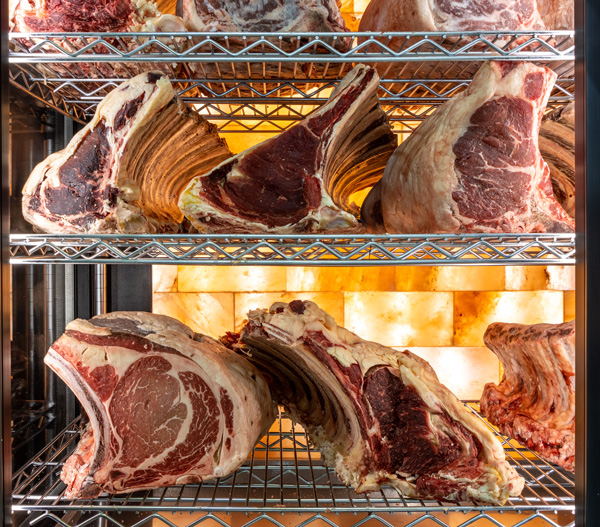
It is a process that intensifies quality. By aging meat, we can make it more tender and flavorful. During the aging or maturation process, muscle fibers and connective tissues break down thanks to controlled microorganisms acting on them. There are two types of aging: wet aging and dry aging.
Wet Aged:
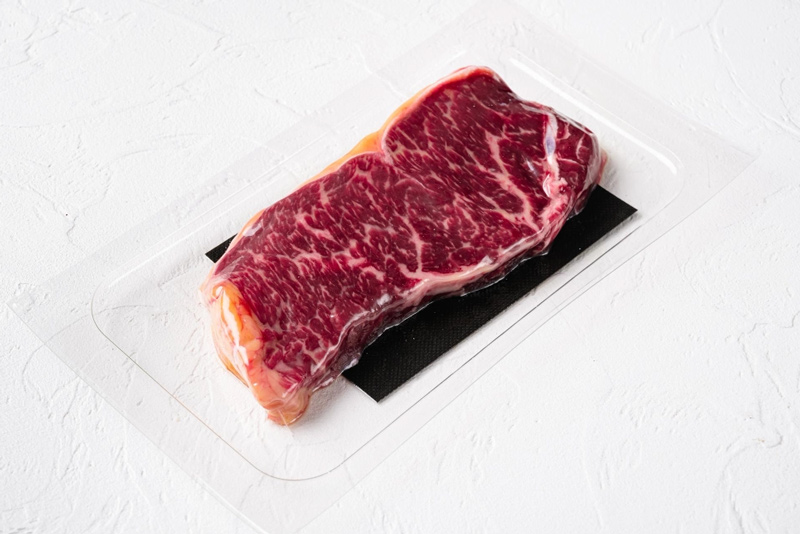
If you have vacuum-sealed meats like all Salvaje products, you can age them at a temperature between -1° and 2°C for up to 90 days. Salvaje recommends keeping them for a minimum of 30 days when they reach outstanding quality.
Important: Only do this for boneless cuts. The bone inside vacuum-sealed packages can create small air pockets, which can cause the product to spoil faster. Therefore, all Salvaje cuts with bones are vacuum-sealed and frozen at the source.
Tip: Before cooking vacuum-sealed meat, remove it from the package and let it rest in the refrigerator for a minimum of 30 minutes so it can oxygenate and recover its color. The longer it rests in the refrigerator—up to 2 days—the better its surface will become and the drier it will be for cooking, which will create a better crust.
Alert: In general, in household kitchens, if there is a power outage, there is no backup power generator like in commercial refrigerators or shops, so the cold chain can be broken (more than 2 hours with the product exceeding 2°C). In this case, consume as soon as possible.
Dry aged:Unlike wet aging, this type of aging is done inside professional refrigerators that control temperature and humidity. This way we can place meat cuts and pieces without packaging. The temperature is also maintained between -1.5° and 2°C like in wet aging, and humidity is controlled between 50% and 75%. This process, which requires more control, allows us to age meat from weeks to several months. This process helps develop more flavor and tenderness. Keep in mind that dry aging causes the meat to lose its own moisture while concentrating flavor, which means the cut can lose up to 30% of its weight. Properly dry-aged meat develops a much more intense and deep flavor—it can taste nutty and have aromas similar to fine cheeses.