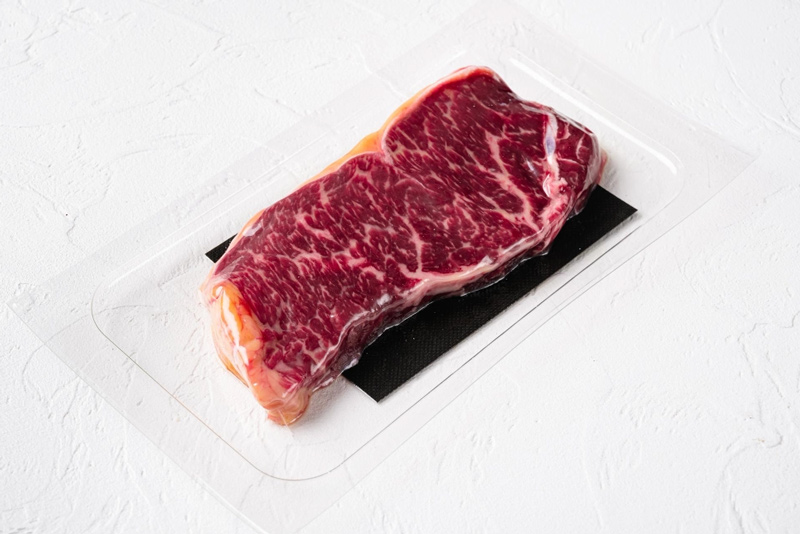
Salvaje products are vacuum-sealed. This is one of the best practices for maintaining and improving meat quality from production to consumption. Vacuum sealing consists of removing oxygen from the package containing the meat, thereby preventing oxidation and slowing down product decomposition. Additionally, this type of packaging allows the meat to age from production to consumption, improving its tenderness and intensifying its flavor. This is possible because the aging process does not require oxygen. The enzymes (proteins) in the product inside a refrigerator between -1° and 2°C tenderize and add greater flavor to the meat. SENASA (National Service for Sanity and Agrifood Quality) indicates that when conditions are met, a vacuum-sealed product should ensure a minimum shelf life of 90 days when refrigerated.
Recommendation: Keep the vacuum-sealed product between -1° and 2°C for 30 days. Only do this for boneless cuts. The bone inside vacuum-sealed packages can create small air pockets, which can cause the product to spoil faster. Therefore, all Salvaje cuts with bones are vacuum-sealed and frozen at the source.
Alert: In general, in household kitchens, if there is a power outage, there is no backup power generator like in commercial refrigerators or shops, so the cold chain can be broken (more than 2 hours with the product exceeding 2°C). In this case, consume as soon as possible.
Tip: Before cooking vacuum-sealed meat, remove it from the package and let it rest in the refrigerator for a minimum of 30 minutes so it can oxygenate and recover its characteristic color.