
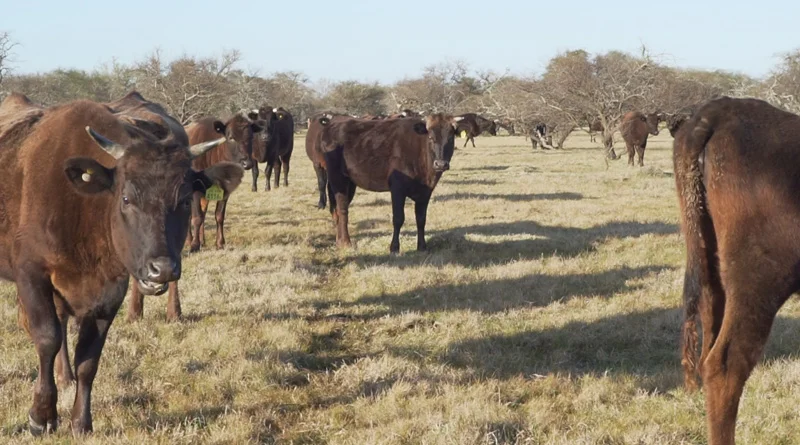
When good practices are used throughout the entire food production process, a high-quality product is achieved with an excellent commercial and ethical result, guaranteeing harmony with animals and the environment.
Animal protein is the preferred source of human nutrition. With population growth, where we expect to reach 9 billion humans within three decades, the production of these foods will increase. To continue enjoying sustainable production while maintaining quality, caring for animals, and protecting the environment, we must ensure that the highest standards of animal welfare and nutrition are met.
What exactly is animal welfare? Below is a brief introduction thanks to thel Institute of Meat Sciences and Craft. These are the basic standards that all Salvaje Products meet.
Scientist Beatriz Hughes, in her 1976 publication, very concisely explains that animal welfare is the state of mental and physical health of the animal in harmony with its environment. On the other hand, scientist Donald M. Broom, in 1986, defines it as the physiological state that allows the animal to successfully adapt to a given environment. The Brambell Committee of the United Kingdom emphasizes that for animal welfare to be met, the following 5 freedoms must be present throughout the animal’s entire life:
-
- Freedom from hunger and thirst
-
- Freedom from physical and thermal discomfort
-
- Freedom from disease and injury
-
- Freedom to express normal behavioral patterns
-
- Freedom from fear and distress
Therefore, in summary, the animal must be in favorable environmental conditions.
An example of how animal welfare is monitored is by observing all normal movements in cattle activity:
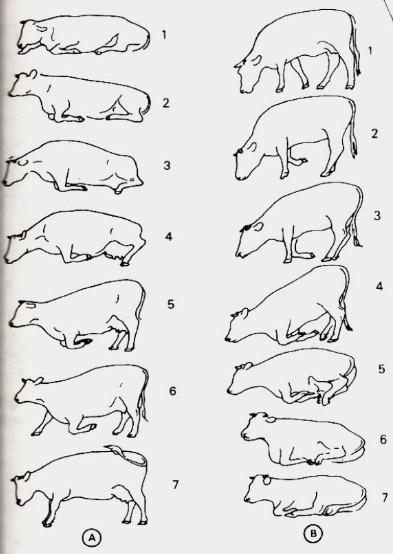
(Fraser & Broom 1990)
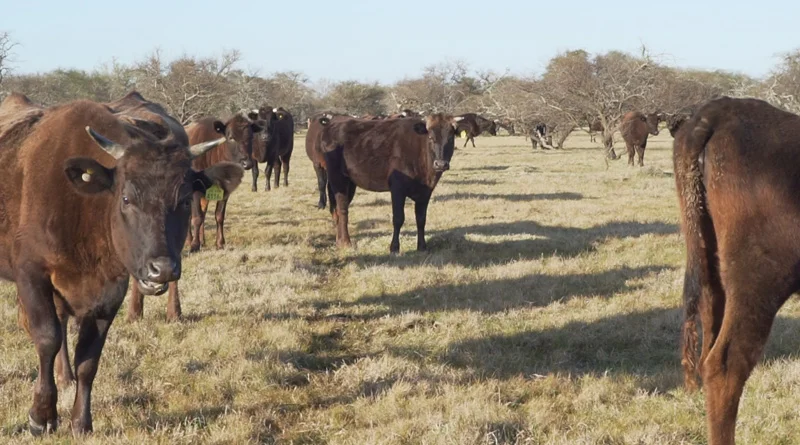
Another way is knowing that they are animals that enjoy living in herds, so an animal should never be left alone or isolated as this can cause them fear and distress. Another example is that environmental assessment uses indicators such as the number of trees, pastures, and animals. Note in the following example from one of our Salvaje producers who uses a natural reserve with pasture, creating super favorable conditions for livestock.
What is cattle feed/diet??
The two main types of feeding systems are: pasture-fed and feedlot. Each feeding method results in a different final product.
On one hand, a free pasture system is an animal that freely eats grass in a meadow, generally in a large-scale field. It is a production method with more natural conditions.
The feedlot system consists of placing animals in pens, providing them with balanced feed such as corn, soy, alfalfa, and others. It is usually a more intensive and even industrial rearing system, but there are also examples of feedlots with excellent animal welfare and environmental conditions.
Then there are hybrid systems where pasture is supplemented with balanced feed, or cattle that spend time grazing on pasture and other time in a feedlot. Juan Barcos, chef and cattle producer, in the following Locos X el Asado video” shows the difference in the final result of each feeding type:
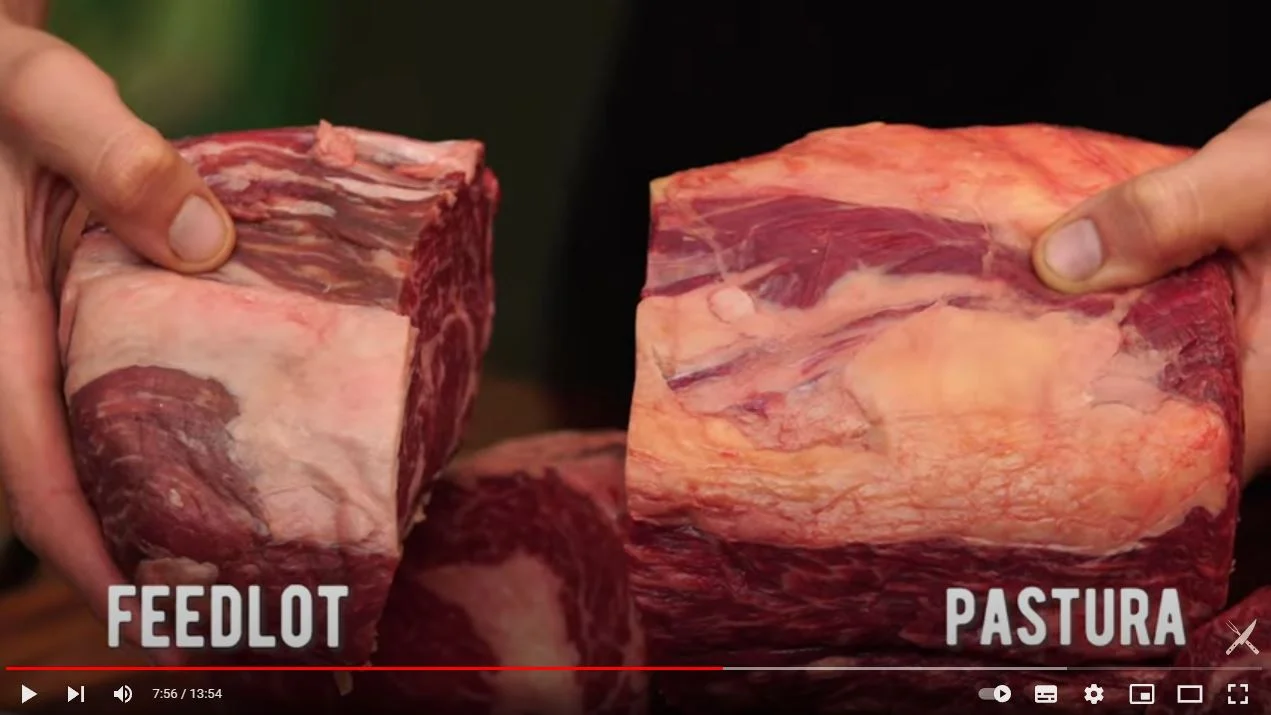
In general terms, pasture-fed beef stands out visually and in taste: a dark red color, yellowish fat, and tastier meat that is more natural with better texture. In the case of feedlot meat, you see a lighter colored product—that is, less meat flavor and more fat flavor—but with superior tenderness.